Showing posts with label weird. Show all posts

Tuesday, February 16, 2010

The God Helmet


THE GOD HELMET

Todd Murphy, 2007
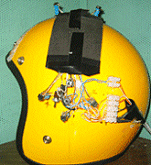


The God Helmet is the popular name given to a laboratory apparatus more correctly called the "Koren Helmet", after Stanley Koren of Laurentian University's Neuroscience Department, who built it according to specifications provided by Dr. M.A. Persinger, director.

The Koren Helmet applies complex (having an irregular shape) magnetic signals to the head of the person who is wearing it.

The Koren Helmet is connected to a PC computer through a 'black box' which cycles the signals through four coils on each side of the head over the temporal lobes of the brain. The temporal lobes are the area of the brain many researchers feel is the source of spiritual and religious experiences. link
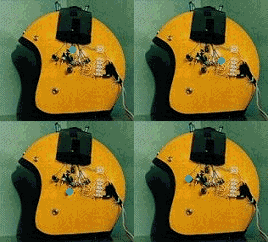
This illustration shows how the signal shifts from one coil to the next. This is a side view. There is also another set of coils working on the other side. The two coils at the top are no longer used.

The sessions are done in an Acoustic Chamber - a completely silent room. A large part of the temporal lobes ongoing activity is dedicated to monitoring ambient sound. The temporal lobes are the source of religious and mystic experiences, so that silence helps a great deal in creating these experiences in the lab.
Used as a research tool to investigate the bran's role in religious and mystic experiences, the Koren Helmet has been given the name God Helmet. A few Journalists gave it this name when they learned that some people had visions of God while participating in Koren Helmet experiments. The name has stuck.
I asked Dr. Persinger how many people had seen God using the Koren Helmet, and this is what he said in reply:
Stanley Koren shows us the most recent version of the God Helmet, which no longer uses a helmet, and has had the unused coils removed.
"The problem is producing an environment in which people will report what they experience without anticipating ridicule on the one hand and not encouraging this type of report (demand characteristics) on the other.
Thus far, about 20 or so people have reported feeling the presence of Christ or even seeing him in the chamber (The acoustic chamber where the experimental sessions took place). Most of these people used Christ and God interchangeably. Most of these individuals were older (30 years or more) and religious (Roman Catholic). One male, age about 35 years old (alleged atheist but early childhood RC (Roman Catholic) training), saw a clear apparition (shoulders and head) of Christ staring him in the face. He was quite "shaken" by the experience. I did not complete a follow-up re: his change in behavior. Of course these are all reports. What we did find with one world-class psychic who experiences Christ as a component of his abilities was we could experimentally increase or decrease his numbers of his reported experiences by applying the LTP pattern (derived from the hippocampus) over the right hemisphere (without his awareness). The field on-response delay was about 10 to 20 sec. The optimal pattern, at least for this person, looked very right hippocampal.


By far most presences are attributed to dead relatives, the Great Forces, a spirit, or something equivalent. The attribution towards along a devil to angel continuum appears strongly related to the affect (pleasant-terror) associated with the experience. I suspect most people would call the "vague, all-around-me" sensations "God" but they are reluctant to employ the label in a laboratory. The implicit is obvious. If the equipment and the experiment produced the presence that was God, then the extrapersonal, unreachable and independent characteristics of the god definition might be challenged."
That's the important thing about the God Helmet. Even if only a few people saw God because of it, it creates a host of new questions - questions theology has never had to face before

The experiences of those who have come face-to-face with God might just be an example of a very rare brain activity. If they actually met the true God, then why did they do so in this experimental setting, but not at other times? Can one control God by controlling someone's brain?
The implications for theology are obvious. Perhaps God exists, but has been waiting until humanity developed enough to find him in the brain before he would appear under any circumstances humans could control. Perhaps God exists only in our brains. Perhaps he exists, and chose to bless 1% of Dr. Persinger's research subjects with visions of him, because these people were believed to him.

Perhaps he exists, but he appears to those with the right neural history in moments when the right pattern of brain activity is present, and not according to what he sees in their hearts.


There is much more to the God Helmet than just the Koren Helmet alone.

There is also a computer program called complex, authored by Stanley Koren, which allows the computer to create the signals. These signals are derived from EEG traces that appear in certain parts of the brain. Just as the brain responds to chemicals with specific shapes, it also responds to magnetic signals with certain shapes.
Because these signals are complex, irregular things, it takes a special computer program to produce them.
A third component is the acoustic - completely silent - chamber where the sessions take place.
The last component is the 'black box' which converts output from the computer into input for the Koren Helmet. This box (not shown) is a specialized DAC (digital-to-analog converter). It's the core of the technology. The rest of the components of the God helmet are quite common.
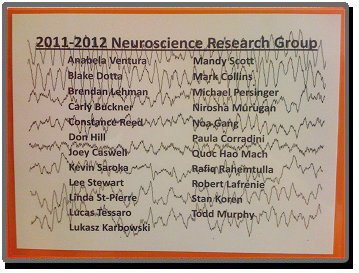
The God Helmet is a misleading name. It give the impression that it can produce the experience of God. In fact, only one percent of the subjects had the experience. It also passes over the crucial role of sensory deprivation - above all, the completely silent environment provided for the subjects. In contrast to the one percent who saw God, 80% of the subjects felt a presence of some kind, but did not call it God. Of course, there were probably some subjects who experienced an appearance of God, but were shy about saying they had seen God in a laboratory. That kind of thing is not only intensely personal, but can also get you ridiculed. If you saw god, would you tell your story just as it happened if you thought you weren't going to be taken seriously? A lot of people assume that, just because someone wears a lab coat, they won't believe such a vision can happen, or that it's a sign of a mental illness. Nothing could be further from the truth in this laboratory, but how would these subjects know that? They had been told they would be participating in an experiment to study relaxation response, and the experimenters were very careful not to encourage such glamorous reports.

Stanley Koren, senior technician for the research group for the last 15 years.

The Koren Helmet has also produced visions of demoniac beings, out-of-body experiences, visions of other realities, and a range of other paranormal experiences. It could have been named after any of them, but journalists prefer more sensational names, and you can't get more sensational than God.

One question that comes up often about the Koren Helmet is whether it's possible to obtain one. The Koren Helmet exists only in the laboratory where it was made, and is not available to the public. There is a version of the God Helmet you can obtain; the Shiva Neural stimulation System.


Thursday, January 14, 2010

The Meaning of Sex: Genes and Gender

From the 2001 Holiday Lectures — The Meaning of Sex: Genes and Gender

Evolution of the Y Chromosome

How did the human Y chromosome become so small relative to its X counterpart? This animation depicts the 300-million-year odyssey of the sex chromosomes that began when the proto X and Y were an identical pair.
5 minutes 38 seconds
Play Large: MOV / WMV (11 MB)
Play Small: MOV / WMV (6 MB)
To download the videos, in Internet Explorer right-click the link and select "Save Target As..." In Firefox right-click and select "Save Link As..." In Safari right-click and select "Download Linked File As..."
More About Evolution of The Y Chromosome
Background
The human X and Y chromosomes are a unique pair. The other chromosome pairs, called the autosomes, appear to be identical twins; they are superficially indistinguishable. In contrast, the X and Y chromosomes appear to be vastly different from one another. Why are the sex chromosomes so different? How did they get that way?
The Y chromosome is only one-third the size of the X. Although the Y has a partner in X, only the tips of these chromosomes are able to recombine. Thus, most of the Y chromosome is inherited from father to son in a pattern resembling asexual, not sexual, reproduction. No recombination means no reassortment, so deleterious mutations have no opportunity to be independently selected against. The Y chromosome therefore tends to accumulate changes and deletions faster than the X. Degradation doesn't occur in X chromosomes because during female meiosis, the X has the other X as a full partner in recombination.
Clues of how the Y chromosome evolved can be found by comparing the genes and the sequences of X and Y chromosomes as well as homologous genes of different species. One method scientists use to estimate evolutionary time is observing how homologous genes have become different over time in different species. All DNA sequences accumulate random mutations over time, so species that are distant relatives should have more different sequences than close relatives because they have been evolving separately for a longer time. Once recombination stopped between portions of X and Y, genes located on those parts started to evolve separately as homologs. Apparently, this happened in stages, so some X-Y gene pairs are more related than others, meaning they stopped recombining more recently. Also, chunks of genes stopped recombining, and by mapping their positions on the chromosome, one can guess that an event, like an inversion, may have taken place.
Travel back in time, when human ancestors were reptile-like forms, and peer into the processes that shaped the X and Y chromosomes.
Introduction
How did the human Y chromosome become so small relative to its X counterpart? This animation depicts the 300-million-year odyssey of the sex chromosomes that began when the proto X and Y were an identical pair. Over time, structural changes in the Y chromosome resulted in its current form, which is specialized to trigger male development. The evolutionary timescale is represented by positioning the chromosomal remodeling events along an abbreviated vertebrate cladogram, a chart of evolutionary relationships.
(Ma = million years ago)
Part 1. Sex chromosomes originated as autosomes
The sex chromosomes began as an ordinary pair of autosomes. During meiosis. chromosomes replicate their DNA, pair, and exchange genes (recombination; red lines). A mutation in the SOX3 gene produced the SRY gene, a critical determinant of maleness, on the proto Y. While the functions of SRY and SOX3 became very different over time, another gene, RPS4, retained a similar function on both the X and Y chromosomes.
Part 2. Inversions restrict recombination between the X and the Y chromosome
Inversions, which are internal recombination events, caused a rearrangement of genes on the Y chromosome. These rearrangements meant that large portions of the X and Y chromosome no longer recombined, which made the Y chromosome susceptible to deletions, and it decreased in size.
Part 3. Comparison of sex-chromosome recombination in males and females
After our lineage diverged from the ancestors of the monotremes, such as the duck-billed platypus, another inversion further scrambled the genes on the proto Y. In males, only the tips of the Y chromosome were left able to recombine with homologous genes on the X chromosome. In contrast, in females, recombination continued to occur across the full length of the two identical X chromosomes.
Part 4. Autosomal expansion of X and Y chromosomes
About 130 million years ago (Ma), an autosome donated a block of genes that extended the length of both the X and the Y chromosome. The X and Y were able to recombine in these expanded regions of the chromosomes. Subsequently, inversions rearranged the order of genes on the Y chromosome. Additional rearrangements occured almost exclusively on the Y. Without recombination to preserve its integrity, the Y continued to lose genes and, over time, shrank.
Part 5. An autosome contributed a copy of the DAZ spermatogenesis gene to the Y chromosome
Sometime after squirrel monkeys diverged from the primates that evolved into humans, an autosome contributed a copy of the DAZ spermatogenesis gene to the Y chromosome. The DAZ gene was copied and copied again and now the modern Y chromosome contains four identical DAZ gene sequences. The modern Y chromosome is about one-third the size of its X-chromosome partner.
Learn More: Autosomes
An autosome is any chromosome that is not a sex chromosome. In ancient reptilian creatures, there was no chromosomal basis for sex determination. Scientists speculate that sex was determined by environmental factors such as temperature. Some modern reptiles, including turtles and crocodiles, still use this mode of sex determination.
Learn More: DAZ
Many genes essential for the production of sperm are located exclusively on the Y chromosome. One of these genes, DAZ (deleted in azoospermia), was copied from an autosome and was copied twice on the Y chromosome, resulting in four copies of the DAZ gene. The Y chromosome is unique because not only are male spermatogenesis genes sequestered on the Y, but they exist as mutiple copies. In fact, the abundance of multiple copies and mirror images of sequences have led researchers to call the Y chromosome a "hall of mirrors." Although this sequence repetition created great challenges in the sequencing of the Y chromosome, the complex structure also serves an important purpose. Multiple copies of essential spermatogenesis genes ensure that in spite of deletion events, which may result in the loss of a single copy of an essential gene, spermatogenesis can still proceed via proteins produced by remaining copies.
Learn More: Deletions
Deletions are uncommon, but relative to inversions, they are not rare events. (Recombination, however, is a common event). Deletions occur particularly in regions of the Y chromosome that do not undergo recombination. The chromosome is mutated, causing a section of DNA to be excised, and the two flanking ends of DNA join to form a continuous strand.
Learn More: Expansion
About 130 Ma, an autosome donated a block of genes that extended the length of both proto X and Y (expansion). The proto X and Y were able to recombine in these expanded regions of the chromosomes. Subsequently, inversions further rearranged the order of genes. Without recombination that preserved the integrity of chromosomes, the proto Y lost genes and, over time, shrank in size.
Learn More: Inversions
On an evolutionary timescale, large inversions, such as those shown in the animation, are actually very rare events. To occur, the DNA at one end of the chromosome recombines with DNA at the other end of the chromosome, forming a loop. Instead of the loop being eliminated from the chromosome (as happens in other types of recombination events), the loop twists. Therefore, the same DNA sequences are retained in the chromosome, but their orientation is reversed. Scientists speculate that large inversions resulted in the relocation of SRY to the "top" of the Y chromosome relative to its former partner SOX3, which remains near the "bottom" of the X chromosome.
Learn More: Meiosis
To produce sperm or eggs, germ cells undergo the process called meiosis. Chromosomes replicate and pair up, resulting in a 4n quantity of chromosomes. Two nuclear divisions follow, so that the gametes have a haploid (1n) number of chromosomes.
Learn More: Mutation
Mutations are alterations in the DNA sequence that occur randomly and can have little or great consequences, depending on the location of the mutation. When a mutation altered SOX3, the testes-determining gene SRY resulted. This mutation had great consequences: The evolution of unique sex chromosomes began.
Learn More: Recombination
During meiosis, chromosomes with substantial DNA sequence homology will pair and exchange pieces of DNA, a process called genetic recombination. This process provides not only a source of genetic variability but also a way in which deleterious mutations are eliminated by not being passed on to future generations. (Recombination allows for reassortment and thus a way for selecting out deleterious mutations without needing to eliminate the entire set of alleles on which the mutation arose.) In this way, recombination preserves the integrity of the chromosomes. The X and Y chromosomes are notably different with respect to recombination. During female meiosis, the two X chromosomes undergo recombination throughout their entire length (illustrated by red lines). In contrast, during male meiosis, the Y chromosome recombines with the X chromosome only at its tips. Thus, over time, deleterious mutations accumulate in the nonrecombining regions of the Y chromosome.
Learn More: RPS4
RPS4 (ribosomal protein small subunit, protein 4) is a gene essential for ribosome formation. Identical copies of RPS4 are found on both the X and the Y chromosome, and the same function has been retained over timeósince before the creation of SRY and through millions of years of divergence between the X and Y. However, the location of RPS4 has changed as a result of a large inversion.
Learn More: SRY
The SRY gene regulates the formation of the testes from the undifferentiated embryonic gonad. The location of SRY and SOX3 on the X and Y chromosomes of several species has been compared, an analysis that has allowed scientists to roughly date when changes occurred. Gene pairs, such as SRY and SOX3, allow researchers to map changes and rearrangements on chromosomes. Specifically, 300 million years ago (Ma), scientists speculate that SOX3 was in the same location on the proto X and Y chromosomes. A mutation in SOX3 created the gene SRY on the Y chromosome. Researchers found that monotremes are the most ancient mammals that have the SRY gene, whereas all earlier ancestors do not. These data allowed researchers to estimate when the mutation that created SRY occurred.
Learn more about SRY at: "Gender Testing of Female Athletes"
http://www.hhmi.org/biointeractive/gendertest/gendertest.html


(copied without permission from http://www.hhmi.org/biointeractive/gender/Y_evolution.html

Sunday, December 20, 2009

I hope men fix things before it's too late - Are men becoming extinct?

Evolution is being distorted by pollution, which damages genitals and the ability to father offspring, says new study. Geoffrey Lean reports

Sunday, 7 December 2008

The male gender is in danger, with incalculable consequences for both humans and wildlife, startling scientific research from around the world reveals.

The research – to be detailed tomorrow in the most comprehensive report yet published – shows that a host of common chemicals is feminising males of every class of vertebrate animals, from fish to mammals, including people.

Backed by some of the world's leading scientists, who say that it "waves a red flag" for humanity and shows that evolution itself is being disrupted, the report comes out at a particularly sensitive time for ministers. On Wednesday, Britain will lead opposition to proposed new European controls on pesticides, many of which have been found to have "gender-bending" effects.

It also follows hard on the heels of new American research which shows that baby boys born to women exposed to widespread chemicals in pregnancy are born with smaller penises and feminised genitals.

"This research shows that the basic male tool kit is under threat," says Gwynne Lyons, a former government adviser on the health effects of chemicals, who wrote the report.

Wildlife and people have been exposed to more than 100,000 new chemicals in recent years, and the European Commission has admitted that 99 per cent of them are not adequately regulated. There is not even proper safety information on 85 per cent of them.

Many have been identified as "endocrine disrupters" – or gender-benders – because they interfere with hormones. These include phthalates, used in food wrapping, cosmetics and baby powders among other applications; flame retardants in furniture and electrical goods; PCBs, a now banned group of substances still widespread in food and the environment; and many pesticides.

The report – published by the charity CHEMTrust and drawing on more than 250 scientific studies from around the world – concentrates mainly on wildlife, identifying effects in species ranging from the polar bears of the Arctic to the eland of the South African plains, and from whales in the depths of the oceans to high-flying falcons and eagles.

It concludes: "Males of species from each of the main classes of vertebrate animals (including bony fish, amphibians, reptiles, birds and mammals) have been affected by chemicals in the environment.

"Feminisation of the males of numerous vertebrate species is now a widespread occurrence. All vertebrates have similar sex hormone receptors, which have been conserved in evolution. Therefore, observations in one species may serve to highlight pollution issues of concern for other vertebrates, including humans."

Fish, it says, are particularly affected by pollutants as they are immersed in them when they swim in contaminated water, taking them in not just in their food but through their gills and skin. They were among the first to show widespread gender-bending effects.

Half the male fish in British lowland rivers have been found to be developing eggs in their testes; in some stretches all male roaches have been found to be changing sex in this way. Female hormones – largely from the contraceptive pills which pass unaltered through sewage treatment – are partly responsible, while more than three-quarters of sewage works have been found also to be discharging demasculinising man-made chemicals. Feminising effects have now been discovered in a host of freshwater fish species as far away as Japan and Benin, in Africa, and in sea fish in the North Sea, the Mediterranean, Osaka Bay in Japan and Puget Sound on the US west coast.

Research at the University of Florida earlier this year found that 40 per cent of the male cane toads – a species so indestructible that it has become a plague in Australia – had become hermaphrodites in a heavily farmed part of the state, with another 20 per cent undergoing lesser feminisation. A similar link between farming and sex changes in northern leopard frogs has been revealed by Canadian research, adding to suspicions that pesticides may be to blame.

Male alligators exposed to pesticides in Florida have suffered from lower testosterone and higher oestrogen levels, abnormal testes, smaller penises and reproductive failures. Male snapping turtles have been found with female characteristics in the same state and around the Great Lakes, where wildlife has been found to be contaminated with more than 400 different chemicals. Male herring gulls and peregrine falcons have produced the female protein used to make egg yolks, while bald eagles have had difficulty reproducing in areas highly contaminated with chemicals.

Scientists at Cardiff University have found that the brains of male starlings who ate worms contaminated by female hormones at a sewage works in south-west England were subtly changed so that they sang at greater length and with increased virtuosity.

Even more ominously for humanity, mammals have also been found to be widely affected.

Two-thirds of male Sitka black-tailed deer in Alaska have been found to have undescended testes and deformed antler growth, and roughly the same proportion of white-tailed deer in Montana were discovered to have genital abnormalities.

In South Africa, eland have been revealed to have damaged testicles while being contaminated by high levels of gender-bender chemicals, and striped mice from one polluted nature reserved were discovered to be producing no sperm at all.

At the other end of the world, hermaphrodite polar bears – with penises and vaginas – have been discovered and gender-benders have been found to reduce sperm counts and penis lengths in those that remained male. Many of the small, endangered populations of Florida panthers have been found to have abnormal sperm.

Other research has revealed otters from polluted areas with smaller testicles and mink exposed to PCBs with shorter penises. Beluga whales in Canada's St Lawrence estuary and killer whales off its north-west coast – two of the wildlife populations most contaminated by PCBs – are reproducing poorly, as are exposed porpoises, seals and dolphins.

Scientists warned yesterday that the mass of evidence added up to a grave warning for both wildlife and humans. Professor Charles Tyler, an expert on endocrine disrupters at the University of Exeter, says that the evidence in the report "set off alarm bells". Whole wildlife populations could be at risk, he said, because their gene pool would be reduced, making them less able to withstand disease and putting them at risk from hazards such as global warming.

Dr Pete Myers, chief scientist at Environmental Health Sciences, one of the world's foremost authorities on gender-bender chemicals, added: "We have thrown 100, 000 chemicals against a finely balanced hormone system, so it's not surprising that we are seeing some serious results. It is leading to the most rapid pace of evolution in the history of the world.

Professor Lou Gillette of Florida University, one of the most respected academics in the field, warned that the report waved "a large red flag" at humanity. He said: "If we are seeing problems in wildlife, we can be concerned that something similar is happening to a proportion of human males"

Indeed, new research at the University of Rochester in New York state shows that boys born to mothers with raised levels of phthalates were more likely to have smaller penises and undescended testicles. They also had a shorter distance between their anus and genitalia, a classic sign of feminisation. And a study at Rotterdam's Erasmus University showed that boys whose mothers had been exposed to PCBs grew up wanting to play with dolls and tea sets rather than with traditionally male toys.

Communities heavily polluted with gender-benders in Canada, Russia and Italy have given birth to twice as many girls than boys, which may offer a clue to the reason for a mysterious shift in sex ratios worldwide. Normally 106 boys are born for every 100 girls, but the ratio is slipping. It is calculated that 250,000 babies who would have been boys have been born as girls instead in the US and Japan alone.

And sperm counts are dropping precipitously. Studies in more than 20 countries have shown that they have dropped from 150 million per millilitre of sperm fluid to 60 million over 50 years. (Hamsters produce nearly three times as much, at 160 million.) Professor Nil Basu of Michigan University says that this adds up to "pretty compelling evidence for effects in humans".

But Britain has long sought to water down EU attempts to control gender-bender chemicals and has been leading opposition to a new regulation that would ban pesticides shown to have endocrine-disrupting effects. Almost all the other European countries back it, but ministers – backed by their counterparts from Ireland and Romania – are intent on continuing their resistance at a crucial meeting on Wednesday. They say the regulation would cause a collapse of agriculture in the UK, but environmentalists retort that this is nonsense because the regulation has get-out clauses that could be used by British farmers.

http://www.independent.co.uk/news/science/its-official-men-really-are-the-weaker-sex-1055688.html


Are men becoming extinct?


Are males becoming an endangered species? That’s the question scientists and researchers have been pondering since alarming trends in male fertility rates, birth defects and disorders began emerging around the world.


BY THE WINDSOR STARNOVEMBER 5, 2008


Are males becoming an endangered species?

That’s the question scientists and researchers have been pondering since alarming trends in male fertility rates, birth defects and disorders began emerging around the world.

More and more boys are being born with genital defects and are suffering from learning disabilities, autism and Tour-ett’s syndrome, among other disorders.

Male infertility rates are on the rise and the quality of an average man’s sperm is declining, according to some studies.

But perhaps the most disconcerting of all trends is the growing gender imbalance in many parts of heavily industrialized nations, where the births of baby boys have been declining for many years.

What many scientists are calling the most important — and least publicized — issue surrounding the future of the human race will be highlighted in a CBC documentary that features two Windsor researchers who’ve studied the phenomenon.

Titled The Disappearing Male and premiering tonight at 9 on CBC TV, the documentary includes interviews with Jim Brophy and Margaret Keith, adjunct sociology professors at the University of Windsor.

They have been studying the decline in the birth of male children in the Aamjiwnaang First Nation community located next to the infamous Chemical Valley, Canada’s largest concentration of petrochemical plants near Sarnia.

A paper co-authored by Keith and published three years ago in the U.S. journal Environmental Health Perspectives suggests that exposure to various chemicals produced by industrial plants surrounding the Aamjiwnaang reserve land may be skewing the community’s sex ratio.

The researchers looked at the community’s birth records since 1984 and saw “a dramatic drop in the number of boys being born in the last 10 years, particularly in the five-year period between 1998 and 2003,” Brophy said.

Of 132 Aamjiwnaang babies born between 1999 and 2003, only 46 were boys. Typically, about 105 boys are born for every 100 girls in Canada.

High miscarriage rates and a unusually high number of children suffering from asthma were also noted by researchers.

Although the link between pollutants and human reproduction has not been firmly established, there is growing evidence that the birth sex ratio can be altered by exposure to certain chemicals, such as dioxin, PCBs and pesticides. Brophy said studies done in the United States, Japan and Europe seem to support the theory that the so-called endocrine disrupting chemicals have a particular effect on males.

Some of these chemicals are found in commonly used products such as baby bottles and cosmetics. They can also cause miscarriages and a “whole host” of disorders in a male child, Brophy said.

Brophy said soil and water contamination in and around the Aamjiwnaang reserve had been documented before, including in a University of Windsor study that found high levels of PCBs, lead, mercury and various chemicals in the area in the late 1990s. Accidental chemical spills in the area have not been uncommon.

But it wasn’t until the Aamjiwnaang birth ratio study was published that the global science community really took notice.

“It triggered this international set of calls from scientists and researchers from around the world who had been looking at this issue in Europe and the United States,” Brophy said. “Aamjiwnaang became almost the poster child.”

Although Brophy has not seen The Disappearing Male documentary yet, he believes the story of the Aamjiwnaang community will be “the focal point.”

He said the documentary also includes interviews with “some of the foremost experts in the world” on environmental effects on reproductive health.

Brophy and Keith have also studied other occupational and environmental exposures to pollutants, including the link between breast cancer and certain types of jobs in the Windsor-Essex region.

Saturday, October 24, 2009

We're Already Dead (But That's Okay)

In this video blog Rob talks about how we've already chosen certain paths in other parallel universes that have led to our deaths in those realities.